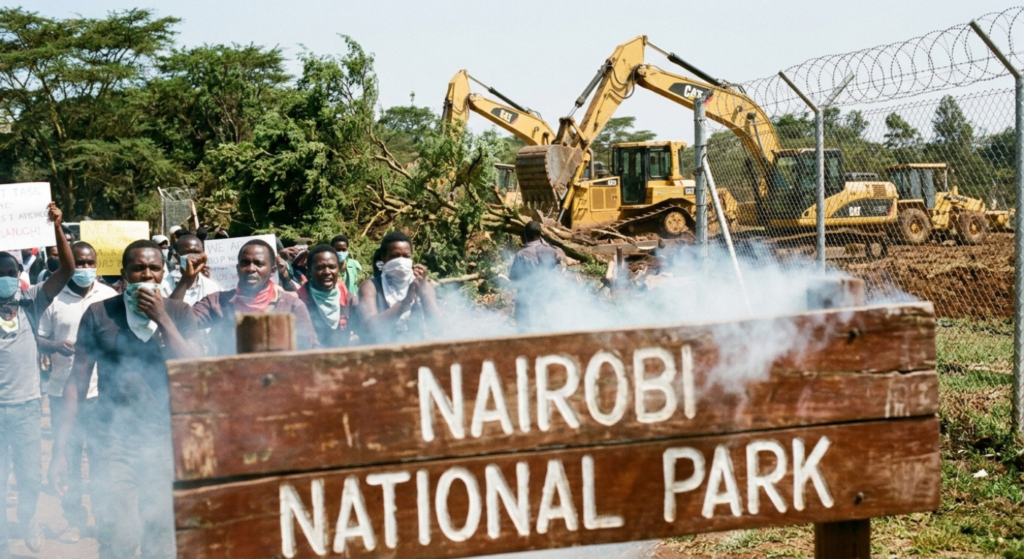
NAIROBI, Kenya — Tensions boiled over outside the gates of Nairobi National Park as police fired tear gas canisters to violently disperse hundreds of environmental defenders, civil rights activists, and high-profile citizens marching to protect the iconic sanctuary from commercial encroachment.
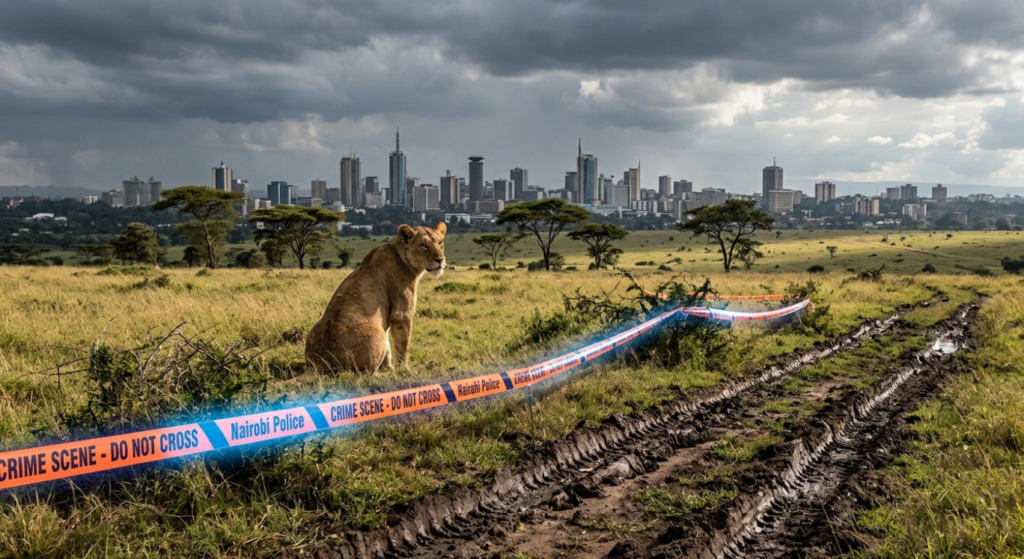
In a shocking turn of events, Kenya’s former Chief Justice David Maraga was among several demonstrators arrested by police during a peaceful sit-in. Clad in a green T-shirt to match the “funeral procession” organized by the Friends of Nairobi National Park (FoNNP), Maraga was seen being forced into the back of a police transport lorry as crowds defiantly chanted, “Long live the park!”.
The uproar centres on a controversial project pushed by the Kenya Wildlife Service (KWS), which critics allege will permanently disfigure the world’s only safari park located within a capital city.
The Spark: A “National Park, Not National Parking”
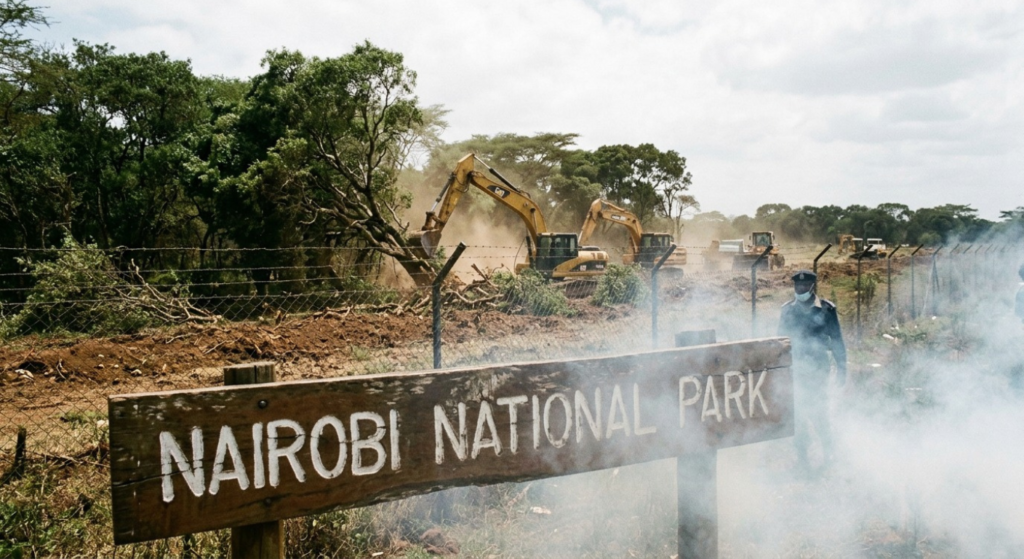
The fury ignited when heavy machinery began clearing indigenous trees in an upland forest section of the reserve. Activists discovered that KWS plans to carve out roughly 76 to 89 acres of protected land.
The land is designated to build a massive 1,300-vehicle commercial parking lot and a pedestrian overpass across Lang’ata Road. This infrastructure directly connects the park to the ongoing Sh41.9 billion expansion of the neighbouring Bomas International Convention Centre. Additionally, the decades-old Nairobi Animal Orphanage is slated to be entirely relocated to facilitate the build.
“Let the record read that this is a national park. It is not a national parking,” declared one protestor. Taking to X (formerly Twitter) after his brief detention, Maraga echoed the sentiment, writing: “Our national heritage and environment must be safeguarded from greed and unnecessary destruction without public participation.”
KWS Fires Back: “An Upgrade, Not a Land Grab”
As accusations of “land grabbing” flooded social media, the Kenya Wildlife Service issued a vigorous defence. Officials insist the development is a legally approved, environmentally cleared upgrade.
According to KWS, the project uses a mere 0.31% of the park’s total area. They argue the relocation of the Nairobi Animal Orphanage will give the animals larger, more natural enclosures, alongside modern veterinary training facilities and a significantly enhanced visitor experience. KWS also claims that appropriate public stakeholder consultations were conducted prior to breaking ground.
Also Read: Best Time To Visit Maasai Mara
A Blow to Accountability and Human Rights
The heavy-handed response from law enforcement has drawn sharp international rebuke. Human rights watchdog Amnesty International Kenya, alongside Greenpeace Africa and The Green Belt Movement, issued a scathing joint statement.
Compounding the outrage, KWS officers in tactical gear directly confronted journalists at the park gates, forcibly confiscating a drone being used by reporter Ian Wafula to document the hidden construction activity. Activists argue that blocking media visibility further validates fears that commercial enterprise is being prioritized over the fragile ecosystem.
With active cases now filed before the High Court and petitions submitted to the Senate by conservation groups, the battle for the soul of Wild Kenya’s most famous backyard is far from over.
Frequently Asked Questions (FAQs)
- Why are people protesting at Nairobi National Park?
Protesters are opposing a Kenya Wildlife Service (KWS) infrastructure project that clears indigenous forest land to build an 8-acre commercial parking lot for 1,300 vehicles, linked to the Bomas Convention Centre expansion. - Why was former Chief Justice David Maraga arrested?
Maraga joined environmentalists in a peaceful “funeral procession” and sit-in along Lang’ata Road to deliver a petition against the construction. He was detained alongside nine other activists by police using tear gas. - What is happening to the Nairobi Animal Orphanage?
KWS is relocating the decades-old orphanage to a new 89-acre site within the park. KWS states this will provide larger, modernized enclosures and upgraded veterinary facilities, though critics fear habitat disruption. - Is Nairobi National Park being sold or grabbed?
While activists and Amnesty International accuse authorities of a backdoor “land grab” for commercial gain, KWS denies this, stating the project occupies just 0.31% of the park and remains legally protected state land.