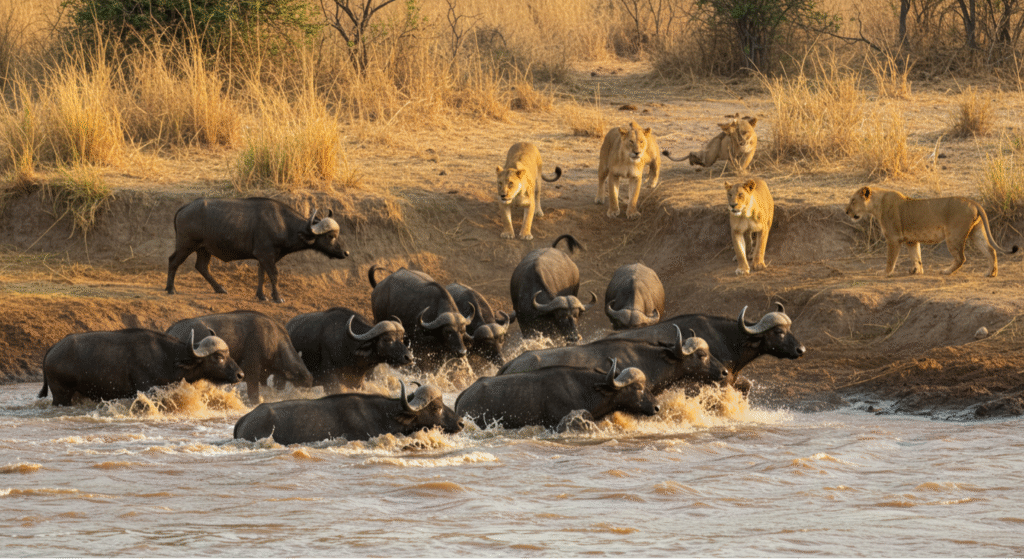
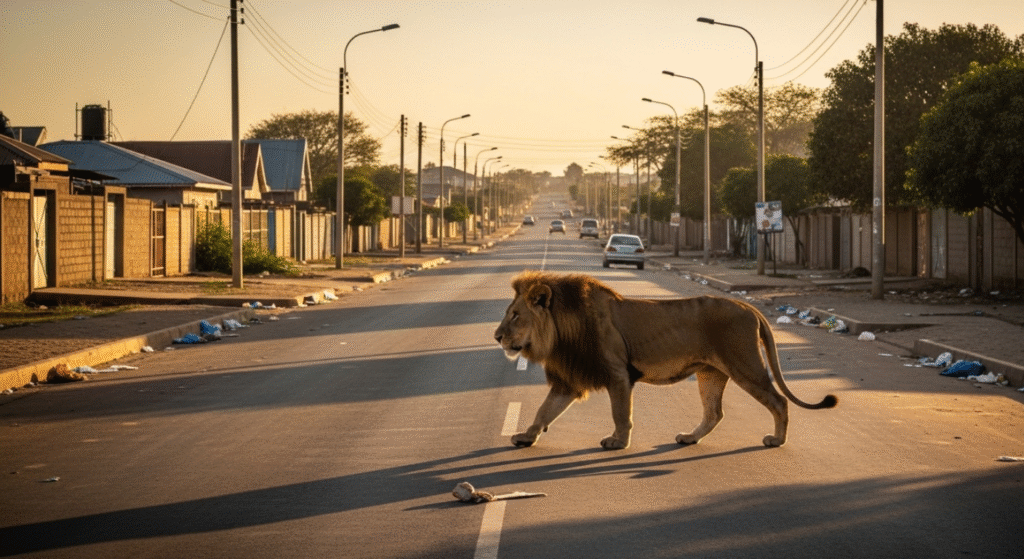
A lion has been roaming the streets of Kitengela, Kenya, for nearly a week, causing concern and fear among local residents. The predator refuses to eat a goat used as bait by KWS, highlighting the unpredictable nature of wildlife in human settlements.
The Lion on the Loose
For almost seven days, residents of Kitengela have stayed indoors as a lone lion wanders through the town. Its presence has disrupted daily life, reminding everyone of how close wildlife and humans coexist in Kenya’s outskirts.
Failed Bait Attempt
Kenya Wildlife Service (KWS) tried to capture the lion using a goat as bait. Surprisingly, the lion refused to eat it. Experts suggest that wild predators may reject prey if stressed or sensing danger, showing the intelligence and caution of these majestic animals.
Community Precautions
Local authorities have urged people to stay indoors, avoid confrontation, and report sightings. The lion’s movements are being monitored carefully to prevent harm to both humans and the animal.
A Reminder of Human-Wildlife Conflict
This incident underscores the delicate balance between urban expansion and wildlife habitats. Kitengela lies close to wildlife corridors, and such encounters are becoming more frequent as humans and animals share space.
The Lion Remains Free
As of now, the lion is still free, moving stealthily through the town. KWS continues its efforts to safely capture and relocate the animal to prevent further risk. The community remains vigilant, hoping for a safe resolution.
https://wildkenya.org/african-rock-python-devours-impala-in-rare-maasai-mara-encounter/
Q: Why would a lion refuse bait offered by wildlife authorities?
A: Lions may reject bait if they sense danger, are stressed, or are not hungry. They rely on instinct and caution when near humans.
Q: How should residents react to a roaming lion?
A: Stay indoors, avoid making noise, and report sightings to local wildlife authorities immediately.
Q: Why are lions appearing in towns like Kitengela?
A: Urban expansion often encroaches on wildlife corridors. Lions and other predators sometimes wander into towns in search of food or territory.
Q: What does KWS do in such situations?
A: They monitor the animal, attempt safe capture using baits or traps, and relocate it to protected wildlife areas to reduce conflict.