In Kenya’s Athi-Kapiti plains near Nairobi, wildlife artist Guy Combes captured an image that stunned conservationists — a cheetah without its trademark black spots. The incredible sighting marks one of the rarest big cat morphs ever recorded, last seen in the country nearly a century ago.
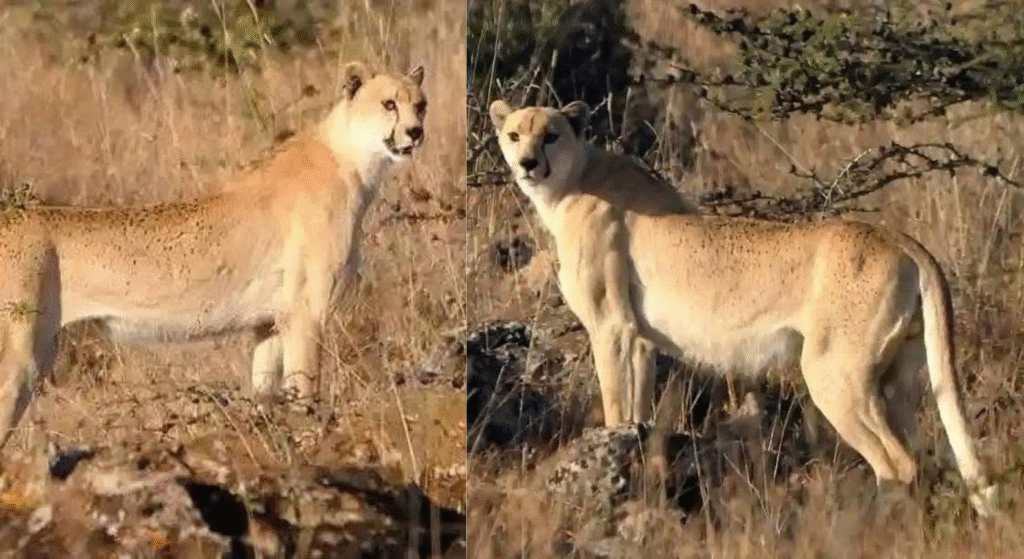
A Rare Beauty in the Savannah
According to Africa Geographic, the extraordinary cheetah was photographed in the Athi-Kapiti area, just outside Nairobi National Park. Unlike typical cheetahs covered in dark spots, this one appeared golden-tan and almost spotless, a result of a recessive genetic trait. Experts say this condition does not stem from albinism or leucism but rather a mutation that dilutes the pigment pattern on the animal’s coat.
A Genetic Wonder
Wildlife biologists note that this morph is comparable to the “King Cheetah,” another rare variant first documented in southern Africa. As Mongabay News reported, such spotless individuals are extremely unusual, and their appearance offers valuable insights into the species’ genetics and adaptability in changing environments.
https://wildkenya.org/baby-elephant-boom-in-kenyas-amboseli-park/
Cheetah Stronghold in Kenya
Kenya remains a critical refuge for cheetahs, particularly in regions like Athi-Kapiti and Amboseli, where open plains still allow these predators room to roam. Kenya Geographic highlighted that this sighting is a testament to the country’s ecological richness and the importance of maintaining wildlife corridors that connect Nairobi National Park with the broader ecosystem.
Symbol of Diversity and Survival
Experts from Cheetah Conservation Fund emphasize that sightings like this reinforce the importance of genetic diversity. Each unique morph reflects the natural variations that help species adapt over time. With fewer than 10,000 cheetahs left globally, conservationists warn that preserving even the rarest individuals is vital to sustaining the species.
A Call to Protect the Wild
While the “golden cheetah” captivates photographers and nature lovers worldwide, it also underscores a sobering truth: habitat loss and human expansion continue to threaten Africa’s most iconic predators. The Athi-Kapiti corridor — where the cheetah was spotted — is under constant pressure from development. Conservationists urge swift action to protect these lands so that future generations can continue to witness nature’s most extraordinary wonders.
https://wildkenya.org/lion-on-the-loose-in-kenya-refuses-goat-bait/
Q: What is a spotless cheetah?
A: It’s a rare genetic variant of the cheetah whose dark spots are nearly absent, caused by a recessive pigment-diluting gene, according to Africa Geographic.
Q: Where was it sighted?
A: The cheetah was photographed in Kenya’s Athi-Kapiti region by wildlife artist Guy Combes, as reported by Kenya Geographic.
Q: How rare is this?
A: Mongabay notes that spotless cheetahs are almost never seen in the wild — the last known sighting in Kenya was recorded decades ago.
Q: Why is this sighting significant?
A: It highlights the genetic diversity within the species and the urgent need to conserve Kenya’s remaining cheetah habitats.